Showing posts with label Anne Carter. Show all posts

Tuesday, August 31, 2010

Cape Seduction: The Story Behind the Story

by Pam Ripling

It's Day Two of my 2010 Blog Tour! I'm really mixing it up this year, in an effort to reach all sorts of readers and like-minded people. Here is an updated article about how I discovered the setting for my latest book.

I don’t remember the first time I saw or heard about St. George Reef Lighthouse. I was likely looking at Battery Point Lighthouse (in photo at left) on-line, since we have a funny family memory of staying at the Curly Redwood Lodge in Crescent City many years ago. It was a foggy night, and, well, the foghorn at Battery Point was very efficient. Not only at warning the ships at sea, but at keeping us awake all night long. To this day, my husband mimics the horn with a deep, throaty hum whenever I talk about lighthouses. Which is often.

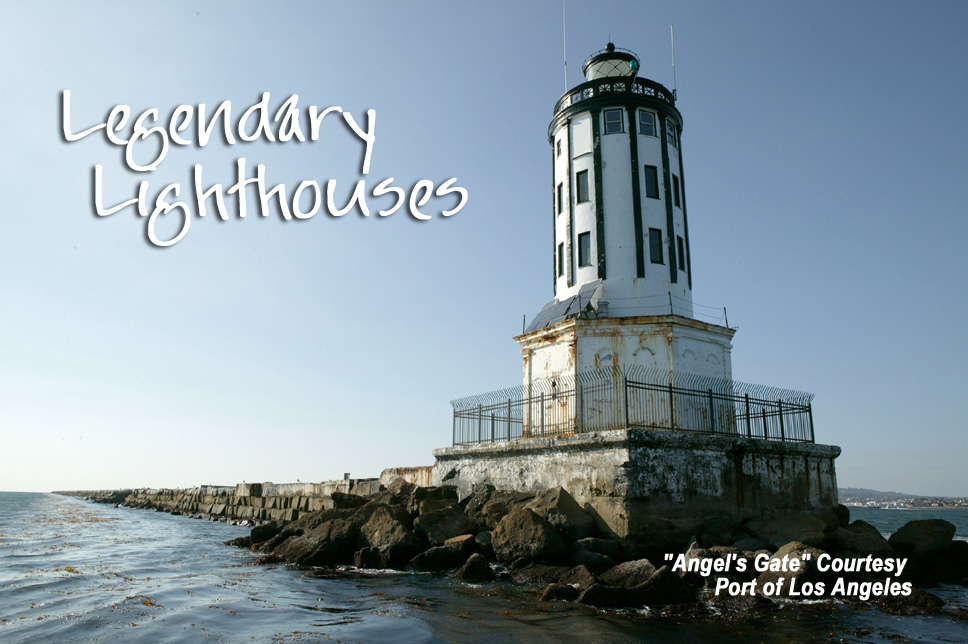
So Battery Point leads us to St. George Reef. Off shore, six miles off the nearest point of land, the lighthouse sits perched on a wave-washed rock it shares with a large family of seals. Like the similar French lighthouse “Phare de la Jument”, St. George has seen some magnificent waves it its day as well. As I looked at photo after photo, and read about the tumultuous history of this extraordinary beacon, I couldn’t help but wonder what it would be like to be out there, all alone, abandoned in that water-locked tower.

Thus began the imagery for my romantic mystery, CAPE SEDUCTION, set for publication this winter. Once research began, I ran across a wonderful resource, SENTINEL OF THE SEAS by Dennis M. Powers, which is the history of St. George Reef Lighthouse. Powers did extensive digging, came up with great stories and photos retelling the life of this mysterious light station.

As my novel required lots of details about the interior workings and accommodations, I contacted Mr. Powers for more information. He kindly referred me to one of the last U.S. Coast Guardsmen to man the lighthouse. John “Gibby” Gibbons was delighted to hear from me, and spent a long time on the telephone describing the engine room, the galley and sleeping quarters. He answered all my questions, then asked for my address. He later sent me this wonderful photo of SGRL taken from a helicopter in the 1950’s, and several snapshots from his years in residence. I am incredibly grateful to this generous man.

St. George Reef Lighthouse has some interesting stats. It’s largely considered the most expensive American lighthouse ever built—$700,000.00—and the most dangerous as well. This direct quote from Powers' SENTINAL says it all: “St. George Reef was the peak of a submerged volcanic mountain six miles off the northern extreme coast of California. Rough weather with howling winds and crushing waves could create mists that obliterated the peaks with great risks for mariners. In 1792 the British explorer George Vancouver had dubbed the reef-strewn area “Dragon Rocks,” and over time the reef became known as St. George Reef, in the hopes “that the dragon might one day be slain.” This is a must-have book for lighthouse enthusiasts.

My novel takes place partly in 1948. I had to know if it would be plausible for a person, a woman in particular, to live alone in a place such as St. George Reef Lighthouse back then. What challenges would she face? Was there electricity? Telephone? Radio? For these answers I turned to former keeper Gibbons, who explained that the station generated its own electricity, both for the living quarters and the light beacon. Large diesel fuel tanks, located outside on the catch deck, were refilled every six months. These tanks were used to fill smaller tanks located in the engine room, which fueled massive generators, keeping the batteries charged. All part of an intricate system for keeping the lights going. Steam engines powered the foghorns.

Gibby mentioned that a bunch of the guys pooled their money for a small television, only to discover that there was no reception at sea. He also described for me the treacherous procedure for gaining access to the rock; small launches would arrive and endeavor to position themselves at the appropriate spot—amid rollicking waves—to be plucked from the sea by the lighthouse’s 50 foot boom. As the waves crested, lifting the boat to its highest level, the mariners had to quickly snag the boom hook with a huge O ring. They typically had 20 to 45 seconds. If they missed, they were at risk of being dashed against the rocks. At best, it took countless, dangerous minutes to reposition for the next wave. Once connected, the boom would swing the launch to a concrete boat deck. The process was repeated in reverse to return the boat to the waters which was even more dangerous. In 1951, a rogue wave slammed into the launch just as it was reaching the water. Three men died.

The keepers at SGRL were clearly at the mercy of the weather. Savage storms and typhoon force winds battered the rock, sometimes for weeks on end. Despite a schedule that provided for ten-day stints at the lighthouse, the men couldn’t count on getting off the rock when high waves blew in and swept against the tower. During the winter of 1955, Coast Guardsmen were shut in for four weeks. Christmas dinner consisted of a can of Spam and crackers!

In the end, I decided that my heroine could, indeed, survive at St. George, but it would be harrowing and dangerous. Just the kind of drama that makes a mystery story a page-turner!

Be sure to leave a comment below and get entered into my celebration contest drawing! You could win a $25 gift card from Barnes & Noble, or 5 ebooks + flash drive from Echelon Press!

Tomorrow's blog stop: Wednesday, Sept 1: Enjoying the Waves with Susan Griscom!

Pam Ripling, who also writes as Anne Carter, is a self-proclaimed Lighthouse Nut and the author of Beacon Street Mysteries CAPE SEDUCTION and POINT SURRENDER, in paperback or for your Kindle; also for your nook, iPhone, Sony eReader and other formats at Omnilit. Visit Pam/Anne at Beacon Street Books.

Friday, August 6, 2010

August 7th: National Lighthouse Day

A quick surf through cyberspace will turn up numerous celebrations of National Lighthouse Day! (I am celebrating by kicking off my month-long campaign to launch my latest romantic lighthouse mystery, CAPE SEDUCTION! More about that later.)

But back to NLD. What's it all about, actually? Well, back in 1988, Senator John H. Chafee (Rhode Island) sponsored a joint resolution that was introduced to Congress on April 28th, designating the day of August 7, 1989 as “National Lighthouse Day.” The enactment of the resolution would coincide with the 200th anniversary of the signing of the Lighthouse Act and the commissioning of the first Federal lighthouse in the United States. The Hon. William J. Hughes, House of Representatives, who co-sponsored the resolution, proclaimed it would "provide some long overdue recognition for the important role which lighthouses played in the history of our country, and the values of safety, heroism, and American ingenuity which they represent." See American Lighthouse Foundation for more.)

Traditionally, those lighthouses open to the public plan special events and celebrations every August 7th. This year is especially fun because the 7th falls on Saturday, a day when lighthouse visitation is already high. One particular lighthouse, however, will remain shuttered today, as it does for most of the other 364 days a year: St. George Reef, the inspiration for CAPE SEDUCTION.

Unlike most on-shore beacons, St. George Reef Lighthouse cannot be worked on at-will. While it needs countless hours of heavy restoration work, the good folks working at this tedious project are only allowed access to the water-locked sentinel during occasional, brief visits. As if it isn't hard enough to restore a lighthouse that can only be accessed by helicopter, this station has become home to numerous marine birds and mammals that the U.S. Fish & Wildlife Service (USFWS) and the National Marine Fisheries Service, Office of Protected Resources says cannot be disturbed.

Still, the St. George Reef Lighthouse Preservation Society, (SGRLPS, founded in 1986) has assumed responsibility for this majestic, weather-beaten beacon, and continues their efforts despite heavy restrictions and foul weather. To raise a little cash (and satisfy lighthouse fanatics like myself) the SGRLPS ferries interested parties out to Northwest Seal Rock for a quick look-see at the lighthouse for around $200/pp. Visitors must steer clear of the sea lions and harbor seals, of course.

In my new novel CAPE SEDUCTION, a lighthouse very much like St. George Reef plays a big role. Just looking at it inspires a mixed sense of wonder and dread. Can you imagine being inside this wave-washed tower, surrounded by angry seas, alone and possibly... abandoned?

Donations to St. George Reef Lighthouse Preservation Society are welcomed here.

See my author website for details about my upcoming blog tour and contest to win free books!

Tuesday, July 27, 2010

In the Lighthouse

Connecting With the Past

How do I begin to describe it? The feeling of walking through what could be a portal to times past, a gateway to a long ago era when courageous men and women endured unimaginable loneliness and hardships unknown to most in their day. Some say there is romanticism to lighthouses, those proud, aging protectors of coastlines worldwide. Others feel apprehension in their shadows, a sort of unidentifiable uneasiness, as if the beacon’s searching white beam could lay open one’s innermost secrets.

I tend to fall in with the former. Lighthouses are romantic, mysterious and intriguing. From the first time I set foot inside Admiralty Head on Whidbey Island, Washington, I was entranced, staring upward at that marvelous nautilus stairway, dizzy at the prospect of climbing the iron steps to the top. But oh! The reward. Stunning does not begin to describe the view from the top.

From that time on, I was hooked. I began collecting all things “lighthouse.” Facts, stories, models, photos. I became somewhat of an expert within my sphere, and I sought entry to as many light stations as I could in my limited travels. Very nearly got thrown off the grounds of one, too.

My brother and his wife own and operate a lovely Victorian era bed & breakfast in a small, historic seaport near the northern entrance to Puget Sound, Washington. Port Townsend was once destined to be the western terminus of the transcontinental railroad, but later lost their bid to the more conveniently located town of Seattle. Still, Port Townsend remains a delightful relic of what could have been, with its stately nineteenth century estates, parks and small inlet.

There are two lighthouses located in Port Townsend. One, Point Wilson, is a traditional white tower on low ground, not open to the public and jealously guarded by its caretakers. “Photos from afar,” if you will. The second lighthouse is in town, built on a small bluff that overlooks the ferry landing to the north and the paper mill to the south. Built in 1990 and fashioned after the popular 1906 Mukilteo Light, Dimick Lighthouse does not have a 3rd order Fresnel lens or a foghorn, but it is “real” nonetheless, and as a friend of the Dimick family, I am invited to stay in their lighthouse whenever I visit.

A few years back, my romantic mystery, Point Surrender, was foundering. Stubborn, tucked deeply away in the black hole of my laptop, my novel steadfastly refused to come to life. I figured I needed some time away and possibly some inspiration. Port Townsend seemed like just the ticket, and to my delight and good fortune, Dimick Light was available for a short stay.

Dimick Lighthouse is a small house consisting of one large living area, a bathroom, and the light tower. The living area provides a double bed, separated from the sitting area by an antique, leaded glass folding screen, and the small kitchenette pretends to be a room behind a small bar. The steps leading to the gallery are wooden, and there is one small window half way up.

Immediately upon arriving, I raced to the top, through the lantern room and outside to literally gulp in the fresh air as I explored again the gallery. Worked “like a tonic” on me, as my grandmother might have said. I sat down there, my back against the lantern room glass, my knees drew up as I contemplated the view of Puget Sound, the Kitsap Ferry and a smattering of sail boats crossing to Marrowstone Island. Breathing actually felt different. Better. Clearer.

So did my mind. With the exception of a couple of meals and one afternoon of Port Townsend jazz, I did not leave the lighthouse for 3 days and nights. The keys on the laptop open on the small kitchen table drew my fingers like magnets. I didn’t know I could type that fast. Words traveled like electric currents from my brain to my fingertips, even as my eyes grew red and swollen. Climbing the steps at Dimick Lighthouse, I could “see” through the eyes of my heroine, Amy Winslow, as she forced her feet to move up Point Surrender’s curling staircase, fearful of what she might find at the top; could “see” just how Liam Jenner’s body might have looked at the bottom, twisted into an unnatural shape from the violence of his fall…

Point Surrender came to life that weekend in Washington, as my connection to lighthouses became a bond that will always remain. So much so, that I felt the urge, the demand, to write a second book wherein one of the main characters was a lighthouse. Cape Seduction was that story... to be continued.